GrowGreen
GrowGreen is a transnational project which focused on the use of nature based solutions (NBS) in creating climate resilience.
It was funded by European Union’s Horizon research and innovation programme. A key output for the project was the creation and evaluation of new, accessible multi-functional neighbourhood green space.
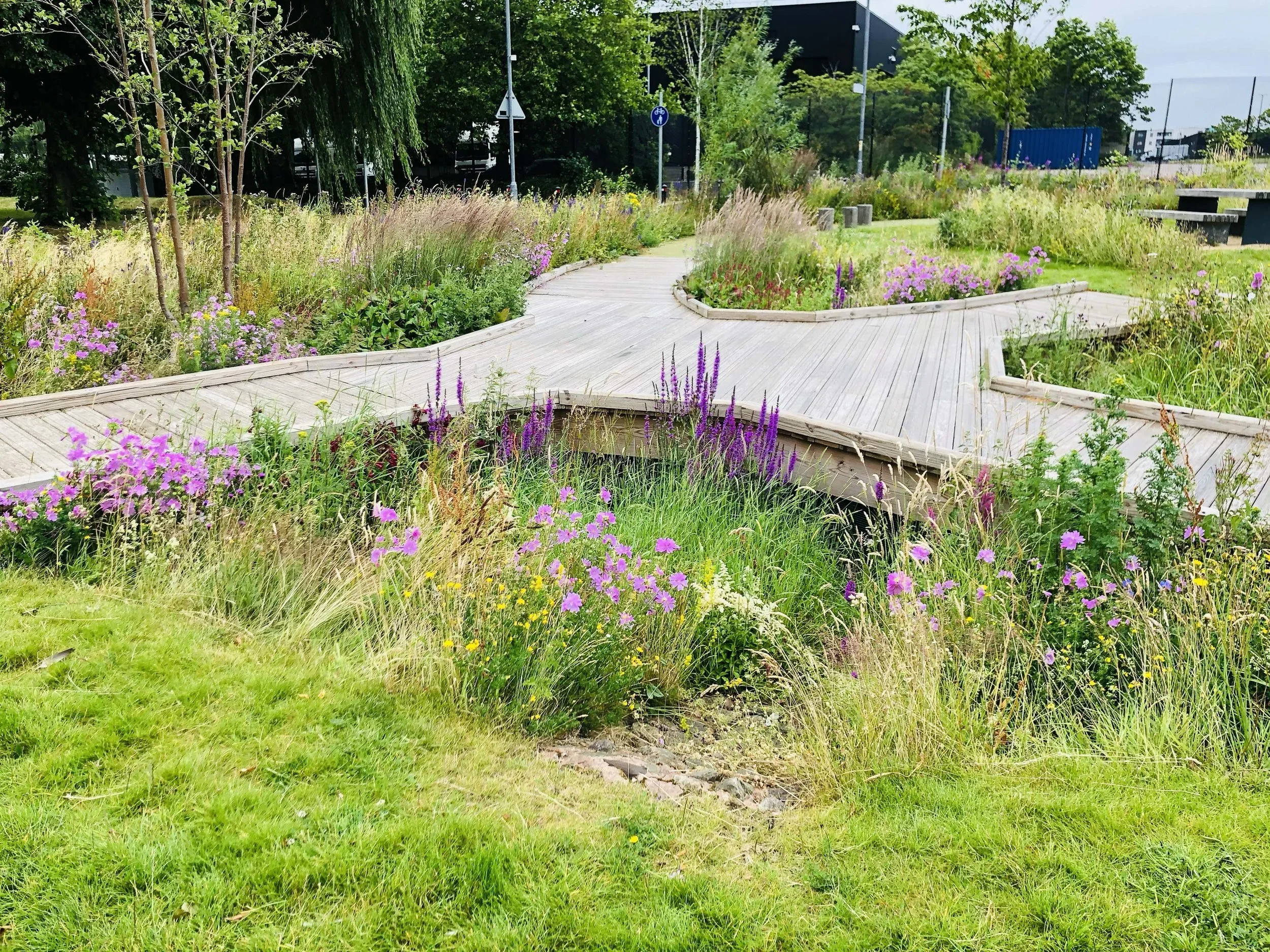
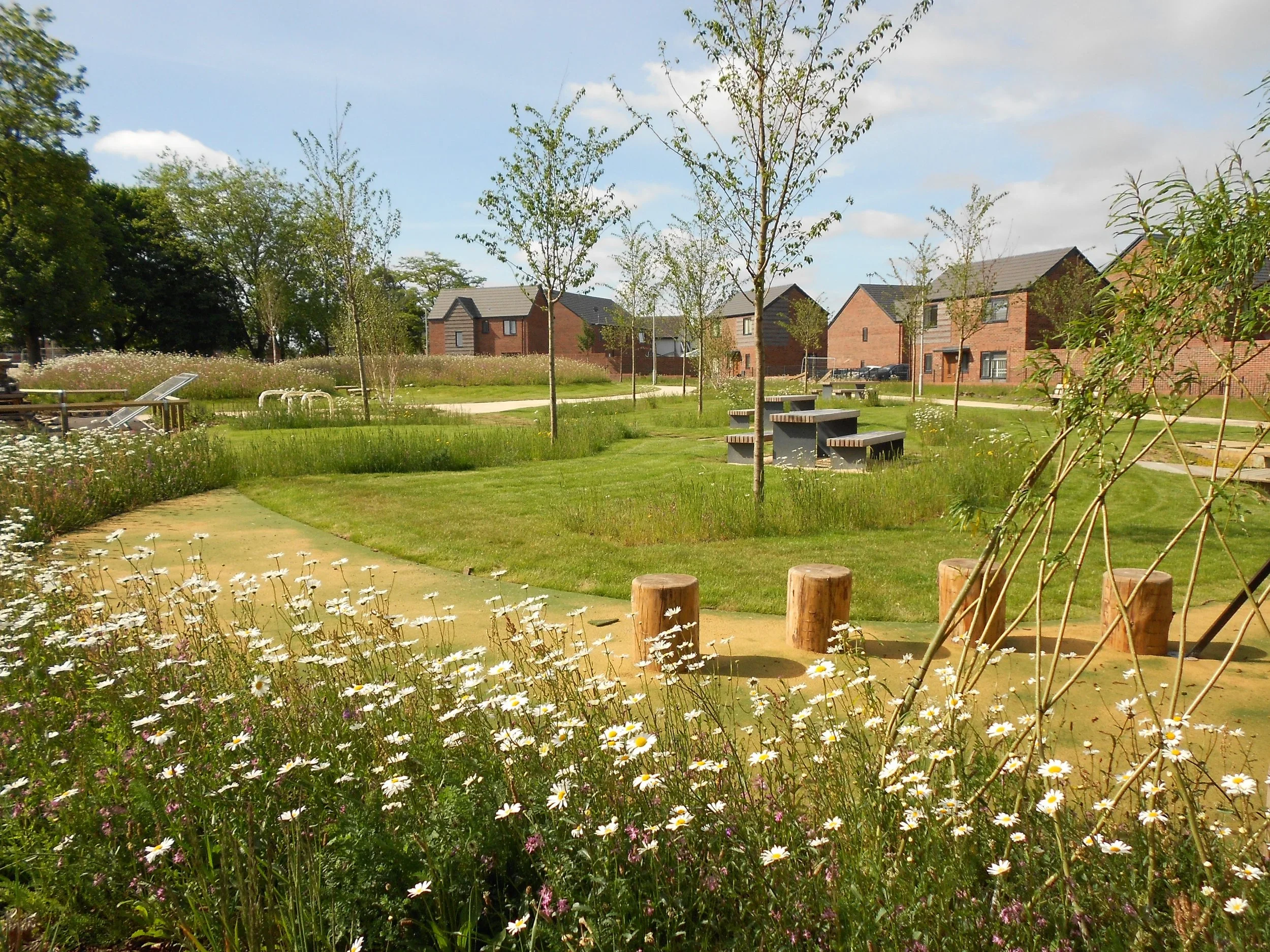
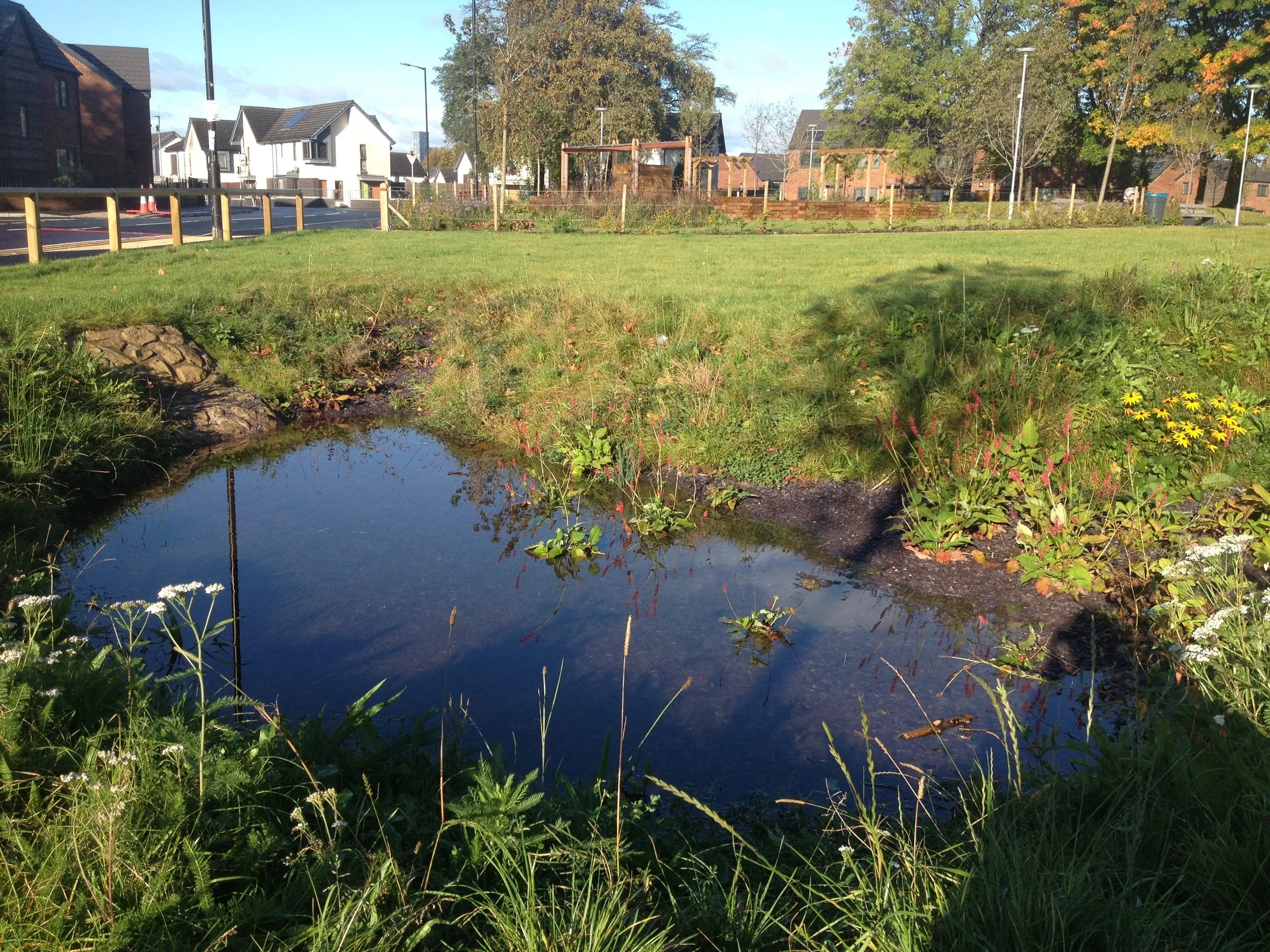
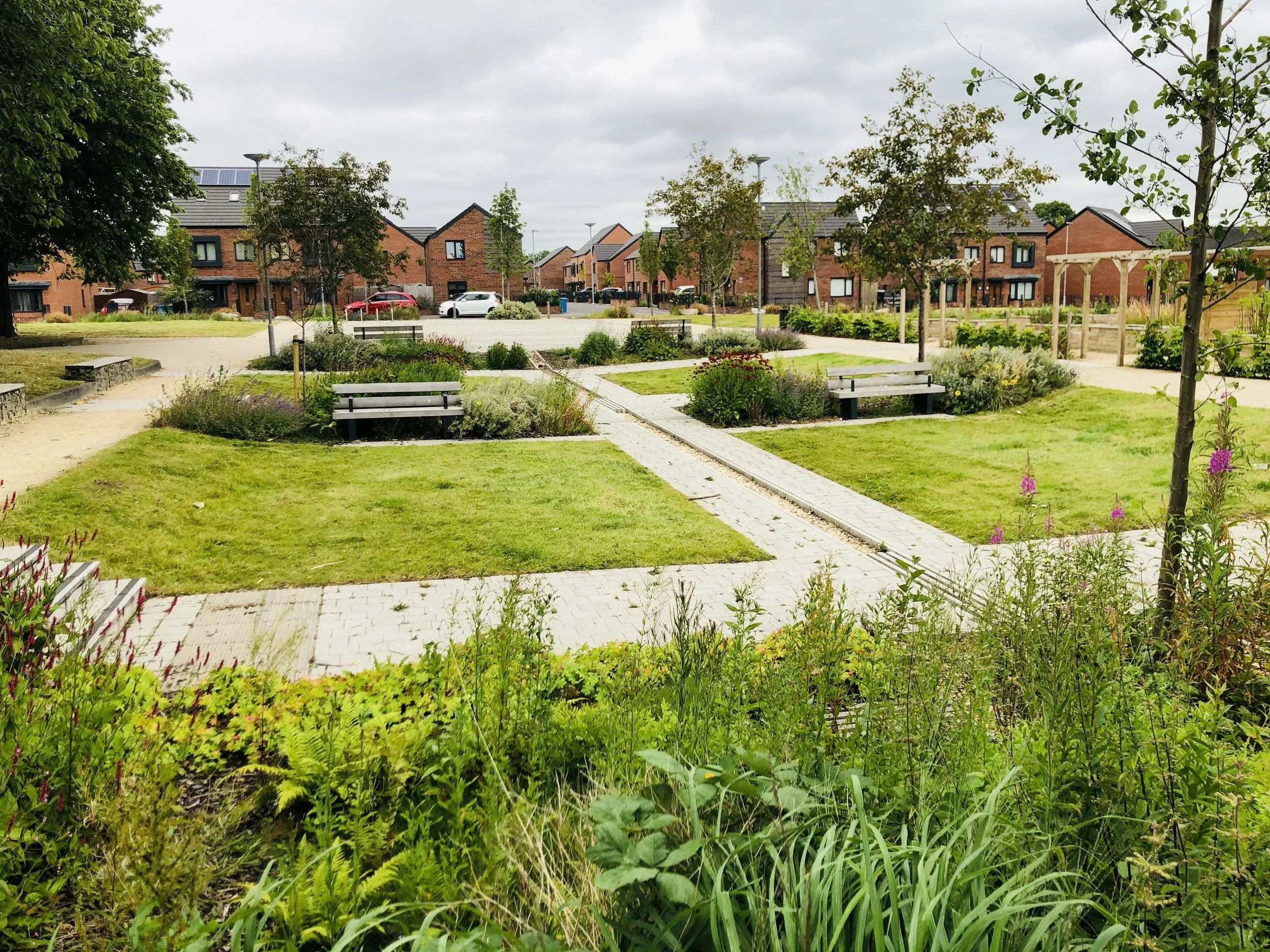
As a GrowGreen partner, Manchester developed the West Gorton Community Park as a recreational green space within a wider regeneration programme which created over 500 new homes. The park, which is the size of three football pitches, was completed in Summer 2020 and includes NBS features that help alleviate some of the negative effects of climate change.
Nicknamed the ‘Sponge Park’ due to it ability to soak up excess water the park’s innovative design demonstrates how NBS can help combat the impacts of climate change.
“It’s not just about planting a few trees in a neighbourhood, it’s about absolutely increasing resilience”
Some of the parks specialist features include:
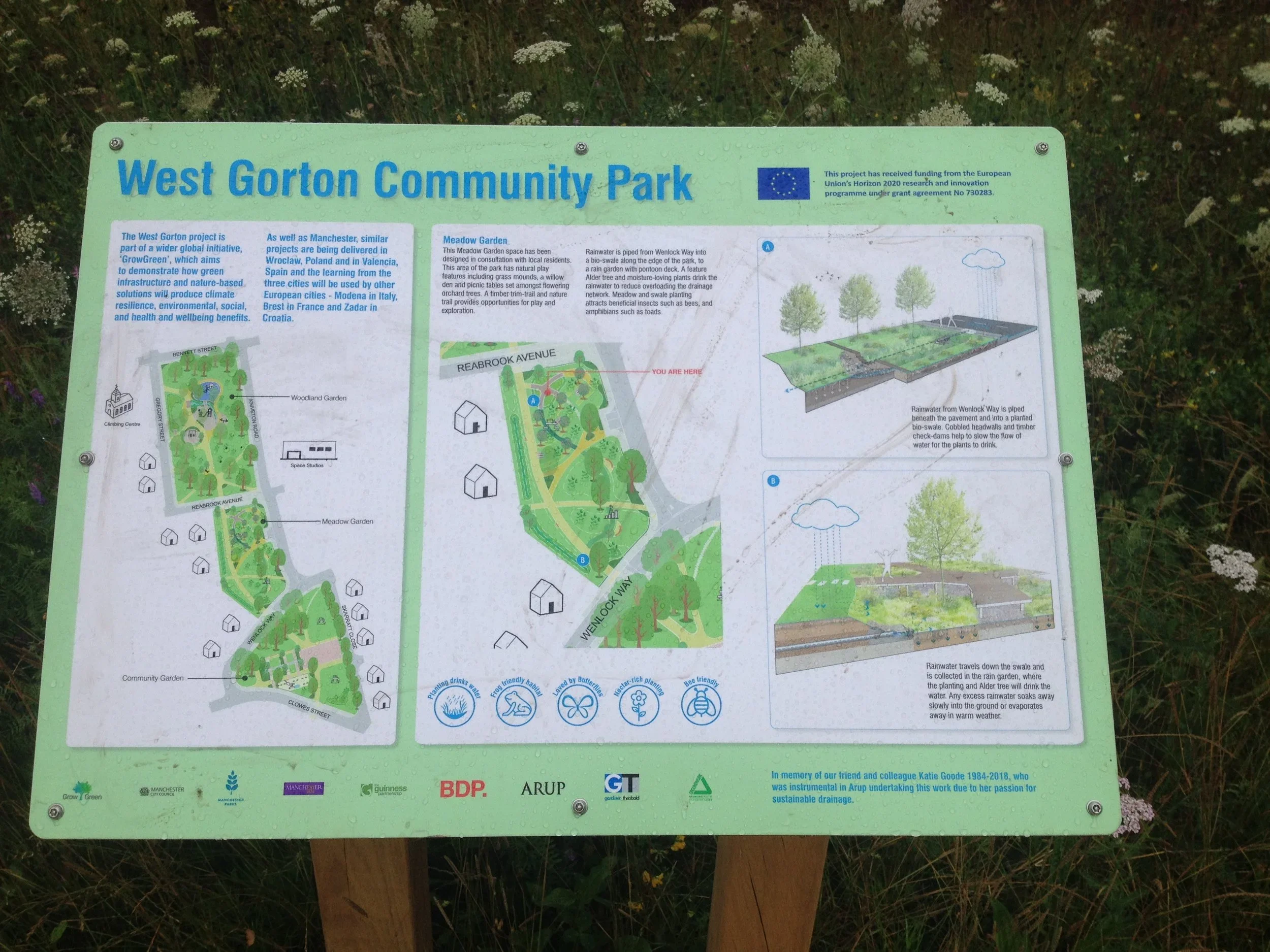
Widespread use of water-loving plants and design features which help capture excess water from nearby roads and slow the rate at which it flows into drains
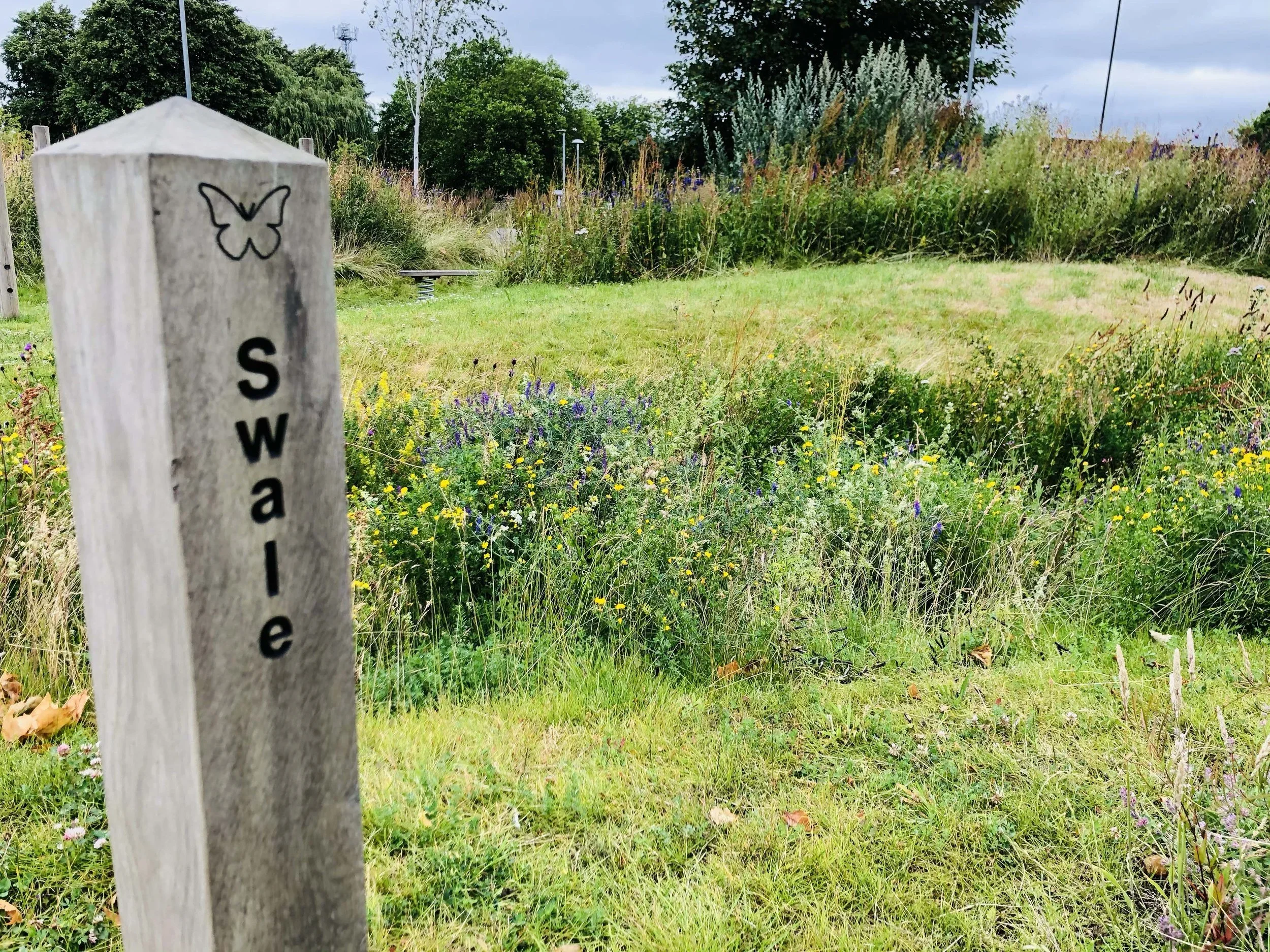
Swales, shallow trenches planted with aquatic vegetation which store and help absorb excess surface water
Rain gardens – attractive low level, wildlife-friendly spaces (which water naturally runs into) filled with thirsty plants which can handle being waterlogged
Bioretention tree pits – designed to receive stormwater and store it for gradual absorption through the root system
“We now have a beautiful greenspace to help nature and share with the community”
Demonstrating the effectiveness of nature-based solutions
A two-year monitoring and evaluation period resulted in the evidence base which demonstrates that the NBS interventions have been effective in reducing water run-off and increasing biodiversity. In addition, data has shown a positive impact on social cohesion, health and well-being.
Further details are included in these downloadable fact sheets:
Park film: West Gorton Community Park | two years later
“From the outset, it kind of demonstrates to people that we’re very much about changing landscapes and improving environments”
West Gorton Community Park - monitoring and evaluation results
For more information on GrowGreen results please contact James Rothwell at The University of Manchester James.Rothwell@manchester.ac.uk
Water management
The sustainable drainage features throughout the ‘sponge’ park reduce urban runoff and lower the risk of flooding.
Two years of monitoring data reveal runoff volumes were reduced by 88-100%, and peak flows reduced by 90-100%.
Heat stress
The new park did not significantly alter site-wide air temperatures when compared to baseline conditions, but where hard paving was replaced by grassed areas, ground temperature was reduced by up to 24°C.
Biodiversity
Survey work revealed the new park has enhanced biodiversity. Tree species diversity increased, together with increases in herbaeceous plants, grasses and native wildflowers. The number of ground-level species increased from 24 to 80.
Green space access
Using a geographical information systems approach, the distance that local residents have to walk to access the new park has decreased. This is due to better connectivity of the park to local housing, with more access routes and entry points.
Participation and governance
Through detailed interview work, organisations involved in the creation of the ‘sponge’ park have enhanced understanding of nature-based solutions, and are better placed to respond to urban ecosystem challenges.
Social justice and cohesion
Survey work before and after park construction with local residents revealed enhancements in local activities, increased social interaction, and an increase in the extent to which they were taking notice of the environment.
Health and wellbeing
Observational survey work before and after park construction revealed a substantial increase in park users undertaking vigorous physical activity, with an uplift in the proportion of non-white persons undertaking outdoor exercise.
Economic benefits
The ‘Benefit to Cost’ ratio for the West Gorton Community Park is forecasted to be 2.5 over a 25 year period. This takes into account capital and operational expenditure, together with increases in property prices, reduction in rainwater treatment, and physical health benefits.
“My grandson said ‘what’s that for?’
Well, I said ‘it’s to collect the rainwater and to help feed the plants”
Key strategies in Manchester
The GrowGreen project provided Manchester with the opportunity to review key strategies.
The Manchester Green & Blue Strategy was refreshed. Although the city had a Green Infrastructure plan which established a baseline of how much of the city was made up of green and blue spaces, the review in 2018 helped to demonstrate that the city is making progress and also helped to update and refine the Implementation Plan.
Download our roadmap and supporting process note for strategy development in the city:
Our Rivers Our City
The GrowGreen project also supported the development of the river valleys action plans to reduce flood risk in the city.
Based on the Sponge Cities concept and the ‘Our Rivers Our City’ campaign to engage citizens in the development of action plans for three of the city’s river valleys.
Further information
Find out more about the Gorton Climate Resilient (Sponge) Park in Manchester